


How to Clean Tinted Windows Safely at Home

A clean windshield and side glass make every drive better, but tinted windows need a little more care than bare factory glass. Learning how to clean tinted windows safely helps protect the film from haze, scratches, lifting edges, and premature wear. The good news is that the right method is straightforward: use gentle products, clean tools, and a light touch.
Quality window tint is built to handle daily use, Indiana weather, and regular maintenance. What damages it is usually not the act of cleaning, but the wrong cleaner, a dirty towel, or aggressive scrubbing. Whether your vehicle is a work truck, family SUV, commuter car, or weekend showpiece, these steps keep the glass clear without risking the tint.
How to Clean Tinted Windows Safely
Start with an ammonia-free automotive glass cleaner or a tint-safe glass cleaner. Ammonia is harsh on many window films and can contribute to discoloration, drying, or a cloudy appearance over time. Household glass cleaners may work well on kitchen windows, but they are not always the right choice for aftermarket automotive tint.
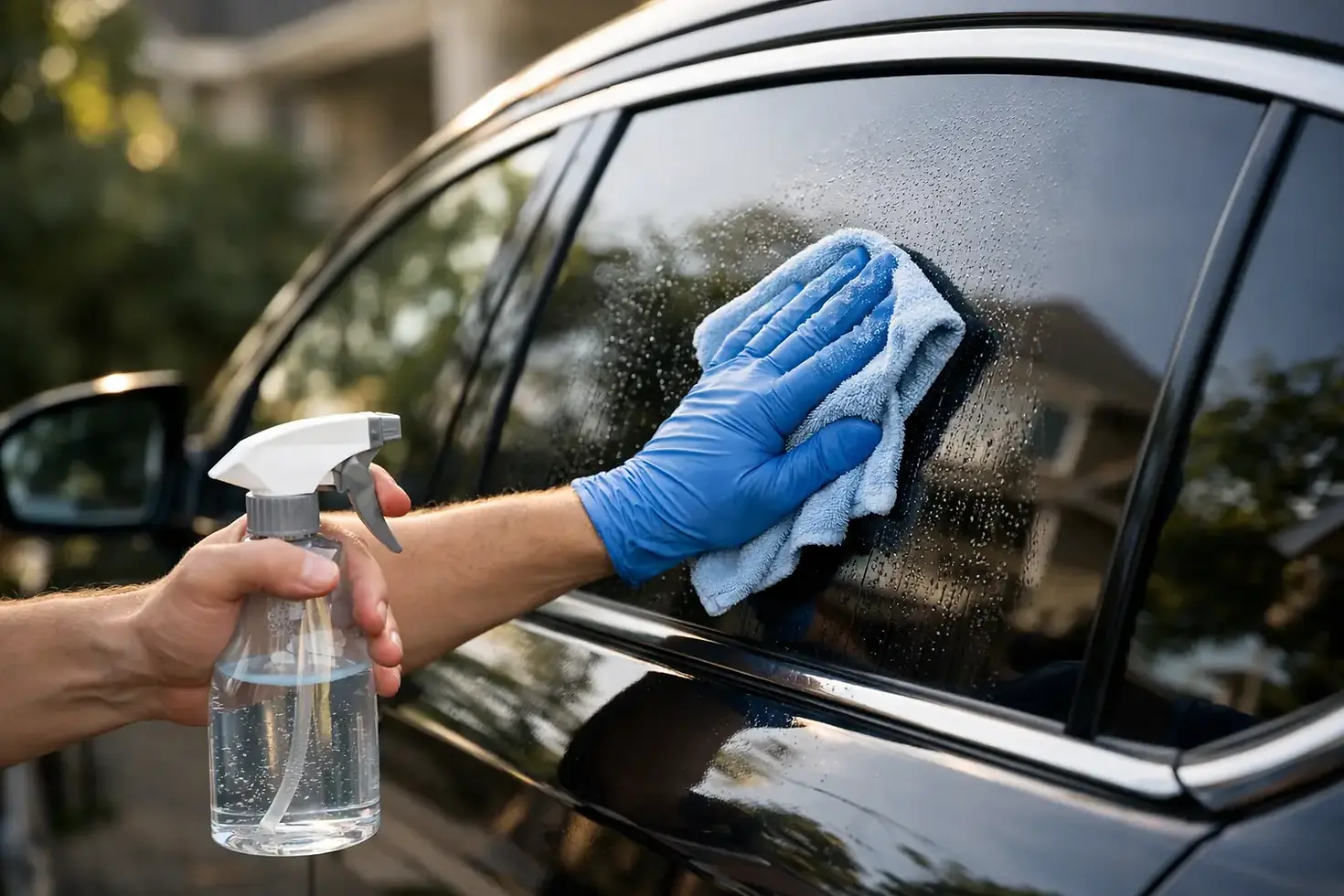
Spray the cleaner onto a clean microfiber towel instead of directly onto the window whenever possible. This gives you better control, keeps overspray off your dash and door panels, and reduces the chance of moisture collecting near the lower edge of the film. Use the towel to wipe the glass in straight, overlapping passes. Then use a second dry microfiber towel to remove any remaining moisture or streaks.
The key is not pressure. Let the cleaner and microfiber do the work. If a spot does not come off on the first pass, apply a little more product and gently work it again rather than scrubbing hard.
Use the right towels every time
A soft, clean microfiber towel is one of the best tools you can keep in your vehicle care kit. It traps dust and grime instead of dragging it across the film. Paper towels, old shop rags, rough cotton towels, and anything that has picked up grit can leave fine scratches behind.
Use separate towels for your interior and exterior glass. Exterior windows collect road film, sand, salt, and brake dust. Bringing that debris inside on the same towel is an easy way to create streaks or add unnecessary abrasion to the tint. For best results, keep several dedicated glass microfiber towels on hand and wash them without fabric softener.
Fabric softener leaves residue that can make glass look smeared in direct sunlight. A simple detergent wash followed by low heat or air drying will keep microfiber towels absorbent and ready for the next cleanup.
What to Avoid on Tinted Windows
The safest window-cleaning routine is often about what you leave out. Avoid ammonia-based cleaners, abrasive pads, razor blades, and harsh degreasers on the interior side of tinted glass. Tint film is applied to the inside of most vehicle windows, so that is where product selection matters most.
Be cautious with products labeled as heavy-duty glass cleaner unless they clearly state they are safe for tinted windows. Also avoid using a blade to remove stickers, paint overspray, or stubborn residue from tinted glass. A razor can cut, gouge, or catch an edge of the film in seconds.
If you are dealing with tree sap, adhesive residue, crayon marks from the kids, or a mystery spot that will not wipe away, test a tint-safe cleaner in a small, less visible area first. Some situations need a more specialized approach, and forcing the issue can cost more than a professional cleaning or inspection.
Here are four common mistakes worth avoiding:
Cleaning hot glass in direct sunlight, which causes cleaner to dry too quickly and leaves streaks.
Using a dirty towel that carries grit from the vehicle exterior.
Soaking the edges of the glass with excessive cleaner.
Scrubbing bubbles, peeling corners, or damaged areas instead of having them inspected.
Clean Interior and Exterior Glass Differently
The outside of the window is exposed to bugs, road grime, rain minerals, and winter salt. It may require a stronger automotive glass cleaner or a proper vehicle wash before you finish with glass cleaner. Since the tint is normally inside the vehicle, you can clean exterior glass more assertively, but a clean microfiber still protects the glass from unnecessary swirl marks.
The interior side requires more patience. Start by folding a microfiber towel into quarters so you have multiple clean surfaces available. Lightly mist one section, wipe the window, then immediately dry it with another towel. Work top to bottom, paying attention to the corners and the strip along the lower edge of the glass.
For windshields and rear glass, reach awkward areas with a dedicated glass-cleaning wand wrapped in a microfiber towel. This is especially helpful on steep windshields and large rear windows. Do not press hard against rear defroster lines. They are durable when cleaned normally, but aggressive scraping or abrasive tools can damage the electrical grid.
Wait Until Fresh Tint Has Cured
Newly tinted windows need time before their first cleaning. The exact curing window depends on the film, weather, and installation conditions, but your installer should give you specific instructions. In Fort Wayne, cooler temperatures and humidity can make the process take longer than it would during a warm, dry stretch of summer.
It is normal to see light moisture pockets or a slightly hazy look while new tint cures. Do not poke at bubbles, rub the edges, or roll the windows down before the recommended time. Those small signs often resolve as the installation dries and settles.
Once the film has fully cured, clean it gently as needed. There is no need to clean tinted windows every day. A quick wipe when fingerprints, dust, or film buildup affects visibility is usually enough. Over-cleaning with too much product can create more streaks than it removes.
Handle Streaks Without Repeating the Problem
Streaks usually come from one of three things: too much cleaner, a towel with residue, or glass that was cleaned in direct sun. If you notice streaks after the window dries, do not keep adding cleaner. Switch to a fresh, dry microfiber towel and buff the glass lightly.
If the streaking returns every time, wash or replace your towels. Glass towels can look clean while still holding wax, interior dressing, detergent, or fabric-softener residue. Using less product often solves the issue as well. A lightly damp towel is usually all you need for interior tinted glass.
Smoke residue, vape film, and oily fingerprints may need two gentle passes. The first loosens the buildup, while the second leaves a clear finish. This is one situation where patience beats stronger chemicals.
When a Professional Inspection Makes Sense
Cleaning cannot fix tint that is fading, turning purple, bubbling, peeling, or separating at the edges. Those are signs that the film may be aging, damaged, or failing. Trying to hide the problem with more cleaner will not restore the appearance or performance of the tint.
A professional can inspect the film, explain whether it needs repair or replacement, and recommend the right path for your vehicle. This matters even more if you have premium tint chosen for heat rejection, UV protection, privacy, or a cleaner finished look. Good film should support your comfort and protect your interior, not become another maintenance headache.
At Patriot Auto Restyling, we believe vehicle care should be practical and done right the first time. A quality tint installation paired with the right cleaning habits helps keep your vehicle looking sharp and feeling more comfortable through every season.
Keep an ammonia-free cleaner and two clean microfiber towels in your garage or vehicle care kit. That small setup makes it easy to clean glass correctly when you need to, while giving your tint the long-term care it deserves.


Comments